
Toxicity of di‑2‑ethylhexyl phthalate and tris (2‑butoxyethyl) phosphate to a tropical micro‑crustacean (Ceriodaphnia cornuta) is higher in Mekong River water than in standard laboratory medium
Environmental Science and Pollution Research 29, 39777-39789 (2022)
Authors: Thanh‑Son Dao1,2 , Van‑Tai Nguyen1,2 , Christine Baduel3 , Manh‑Ha Bui4 , Viet Tuan Tran5, Thanh‑Luu Pham6,7 , Ba‑Trung Bui8 , Khuong V. Dinh9,10
1 Department of Environmental Management, Faculty of Environment and Natural Resources, Ho Chi Minh City University of Technology (HCMUT), Ho Chi Minh City, Vietnam
2 CARE, HCMUT, Vietnam National University, Ho Chi Minh City, Vietnam
3 IRD, CNRS, Grenoble INP, Institut Des Géosciences Et de L’Environnement (IGE), Université Grenoble Alpes, 38050 Grenoble, France
4 Department of Environmental Sciences, Saigon University, Ho Chi Minh City, Vietnam
5 Environmental Monitoring Division, Institute for Tropical Technology and Environmental Protection, Ho Chi Minh City, Vietnam
6 Vietnam Academy of Science and Technology (VAST), Graduate University of Science and Technology, 18 Hoang Quoc Viet Street, Cau Giay District, Hanoi, Vietnam
7 Institute of Tropical Biology, Vietnam Academy of Science and Technology (VAST), 85 Tran Quoc Toan Street, District 3, Ho Chi Minh City, Vietnam
8 Department of Environmental Toxicology, Institute for Environment and Resources, Ho Chi Minh City, Vietnam
9 Department of Fisheries Biology, Nha Trang University, Nha Trang City, Vietnam
10 Present Address: Department of Biosciences, University of Oslo, Blindernvn. 31, 0371 Oslo, Norway
Accepted: 27 January 2022
Published: 03 February 2022
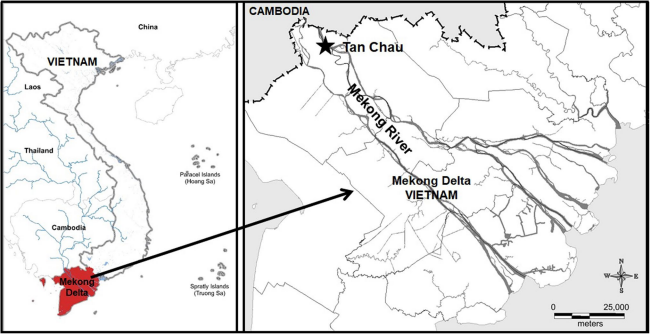
Abstract. Plasticizers such as di(2-ethylhexyl) phthalate (DEHP) and tris (2-butoxyethyl) phosphate (TBOEP) are manufactured chemicals produced in high volumes. These chemicals are frequently detected in the aquatic environment and cause toxic efects on organisms. In this study, we assessed the chronic impacts of DEHP and TBOEP, respectively, at the concentration of 100 µg L−1 dissolved in the artifcial medium (M4/4) and Mekong River water on life history traits of a tropical microcrustacean, Ceriodaphnia cornuta, for 14 days. DEHP and TBOEP substantially reduced the survival of C. cornuta. In M4/4 medium, both plasticizers strongly enhanced reproduction but did not infuence the growth of C. cornuta. Mekong River water, plasticizers-exposed C. cornuta produced less neonates than those in the control. The detrimental impacts of DEHP and TBOEP on the ftness of C. cornuta were much stronger in natural river water than in M4/4. Our results suggest that plasticizers can cause adverse efects on tropical freshwater cladocerans, particularly in natural water. These results are of a deep concern, as national and international regulatory guidelines which are based on ecotoxicological tests using standard media may not fully capture these efects.