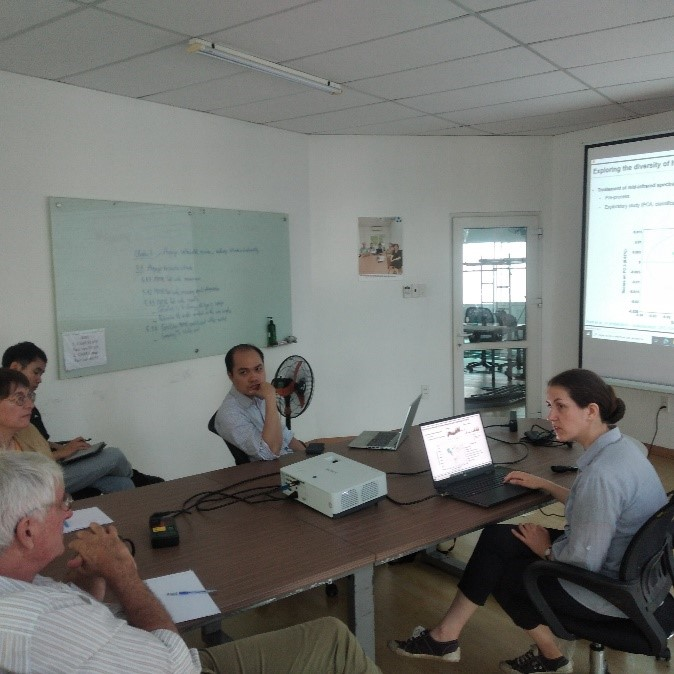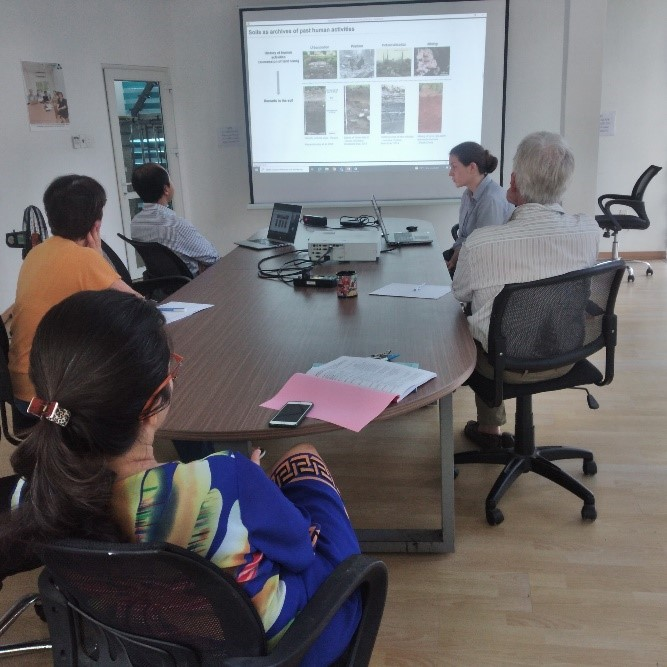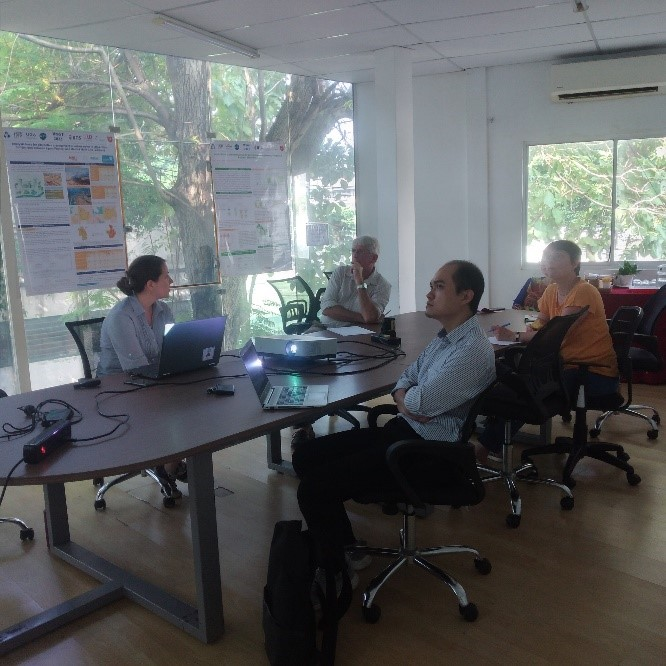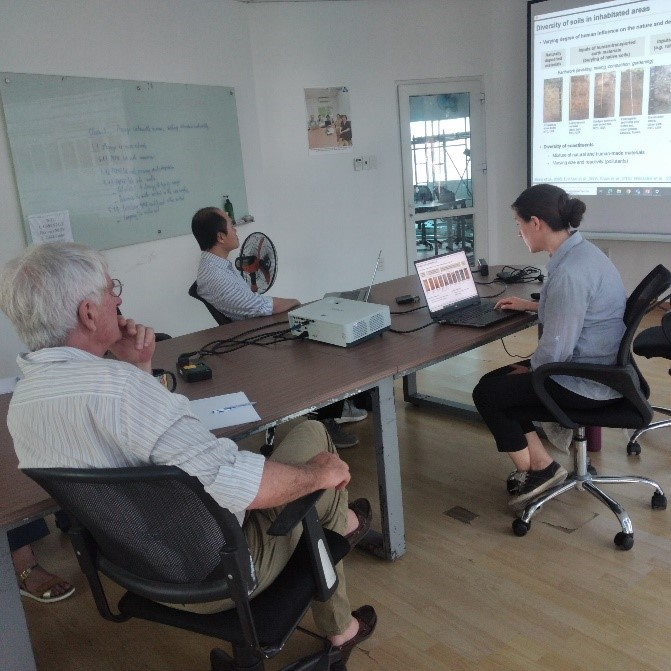

SEMINAR AT CARE: INVESTIGATING THE IMPACT OF HUMAN ACTIVITIES ON SOIL FORMATION AND FUNCTIONING TO DEVELOP SUSTAINABLE CITIES

On October 27, 2023, at the Asian Center for Water Research (CARE-RESCIF), Ho Chi Minh City University of Technology (HCMUT), VNU-HCM network, a presentation titled "Exploring the Consequences of Human Activities on Soil Formation and Functionality for the Advancement of Sustainable Urban Areas" is held. The presenter, Hermine Huot, is a distinguished soil scientist affiliated with the Institut de Recherche pour le Développement (IRD) and serves as a member of the Institute of Ecology and Environmental Sciences in Paris
Her research aims at better understanding the influence of human activities on (i) soil formation processes (pedogenesis) and (ii) soil functioning, in particular on water and elemental fluxes (carbon, nutrients, pollutants) and on the habitat for soil organisms (plants, microorganisms, fauna). She has worked on soils affected by human activity in different contexts (management of industrial wastelands, study of urban soils and reclamation of mine sites) in different countries (France, United States of America, China).
Abstract:
Over time, human activities have successively modified the soil characteristics and the environmental conditions of soil formation. As a result, there is a great diversity of human-influenced soils in urban areas. Soil composition and morphology at different scales can record information about the history of successive land uses. By modifying soil properties, human activities alter, in the short or long term, the ability of soils to perform essential functions (e.g. filtration, biomass production, water and nutrient storage, habitat for organisms) and to provide services necessary for the development of human societies. Some soil functions can be degraded, for example through pollution, compaction or sealing, but others can be restored through restoration practices.
Urbanisation is increasing rapidly in Vietnam, where growing cities can face a number of social and environmental problems, such as waste and wastewater management or air quality, and are vulnerable to extreme climatic events (heat waves, floods, water stress). The development of sustainable and resilient cities poses several challenges, including making better use of natural resources, ensuring food security and health for city dwellers, protecting biodiversity and improving resilience to climate change. Soil, as the foundation of urban ecosystems, can contribute to meeting these challenges by providing provisioning services (support for food and non-food biomass, habitat for biodiversity), regulating services (water and nutrient cycles, filtration of pollutants, carbon sequestration) and cultural services (archives, well-being). Understanding and preserving the quality of urban soils and taking account of their potential in urban planning are therefore important levers for the development of sustainable cities. In this context, the study and management of urban soils should be promoted. More specifically, it would be of interest to (i) better understand the impacts of urbanisation on soil functioning and evolution, (ii) assess the potential of urban soils to provide ecosystem services necessary for sustainable cities, and (iii) develop soil management solutions adapted to the constraints and expectations of cities in Vietnam.
Photos